10 Popular Flow Sensor Types (And Their Application)

A dashboard of a vehicle with 3D images of graphics displayed everywhere

Businesses, original equipment manufacturers (OEMs), and industrial specialists: flow sensors are important, indispensable even, for many industrial processes. They help you accurately measure the flow rate of substances and detect leaks or blockages. Whether to optimize system efficiency, calculate fluid properties, or comply with regulatory environmental compliance audits, understanding the capacities, functions, and basic applications… Read more »

Flow Measurement Devices and Applications (for Gases and Liquids)

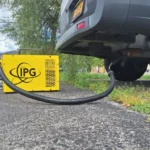
A picture of a flow measurement device called IPG

Flow measurement devices: They’re key for helping measure the flow of a liquid or gas substance in a particular system. Without them, original equipment manufacturers and product development teams aren’t able to quantify the flow, type, and distribution of elements needed to power innovative and useful equipment. Buy the right flow measurement device, and you… Read more »

Spectrometers vs. Spectrophotometers: Differences/Similarities

GlobalMRV's banner

Perhaps you’ve needed measurement devices for colors before. Perhaps you work in an industry that needs to measure infrared wavelengths using spectroscopy. Either way, you’ve probably heard of spectrometers and spectrophotometers. But what’s the difference between spectrometers and spectrophotometers? And, how are they similar? Knowing the difference between the two is key to ensuring you… Read more »

What Are Regulatory Environmental Compliance Audits?

A picture of two people shaking hands against a backdrop of technology

Simply put, it’s adhering to environmental regulations that decrease businesses’ and original equipment manufacturers’ (OEMs) environmental impact on our planet’s natural resources. If you’re a business person, you’ve likely noticed a rise in compliance measures, such as EPA Method 21, aimed at reducing the negative impact of manufacturing processes. Because, let’s face it: industrial processes… Read more »

What Are the Advantages of Hydrogen Energy (Pros and Cons)?

A picture of an exhaust tailpipe affected by the positive crankcase ventilation system

28%: that’s the total percentage share of anthropogenic greenhouse gases emitted by the transportation industry in the U.S., according to a 2022 Environmental Protection Agency (EPA) report. No wonder companies and research specialists are considering hydrogen energy as a viable alternative to traditional fuels for vehicles. But what are the advantages of hydrogen energy? And… Read more »

How Industrial Air Pollution Affects Our Health (HD Vehicle Emissions)

A picture of tailpipe exhaust coming out of a sedan vehicle

7.28 billion people, or 88% of the world’s population: that’s the number of people directly exposed to unsafe average annual concentrations of industrial air pollution, PM2.5 in particular, according to a 2022 World Bank Group publication. If you’re an original equipment manufacturer or industrial business, you do the world an enormous amount of good by… Read more »

Primary vs. Secondary Pollutants: Definitions, Differences, & More

An aerial view of a smoke stack at an industrial facility

Measuring and verifying air pollution can be challenging. For businesses and original equipment manufacturers (OEMs), understanding the difference between primary vs. secondary pollutants is key to creating a profitable and safe operation. First, we need to know the difference between the two and what can be done to keep them in check. But, where do… Read more »

What’s Fourier Transform Infrared Spectroscopy (FTIR) Analysis?

A picture of a person with a thumb pressing on a digital imprint of a circle that reads CO₂

Businesses and industrial specialists: you may have come across an acronym, FTIR, in your work on the job. “What is FTIR?” you might be wondering. GlobalMRV here: knowing the basics of FTIR is key for data analysis — particularly renewable energy audits and energy efficiency audits. If you’re in the manufacturing or product development sector,… Read more »

About Non-Dispersive Infrared (NDIR) Sensors: Method & Systems

A picture of a smiling woman with engineering parts, presumably NDIR sensors, in the background on shelves

What is the meaning of NDIR? And why are non-dispersive infrared (NDIR) sensors so important for gas detection and other environmental emissions testing and regulation? Original equipment manufacturers (OEMs) and industrial organizations: if you’ve ever wanted to improve the sustainability, productivity, and efficiency of your product, you’ll definitely want to listen to what’s coming next…. Read more »